About IPI
A national organisation, built from the communities it serves.
Established in 2023, Inclusive Path Initiative is a non-profit, non-partisan national NGO working across South Sudan's most under-served areas.
Established
2023
Registration
NGO Act 2016 · RRC
Status
National · Non-partisan
Thematic areas
06
Our background
Why IPI exists
South Sudan has been shaped by repeated conflict, flooding and intercommunal violence. The consequences fall unevenly — and they fall hardest on women, children, people with disabilities and those displaced from their homes.
Economic and social dynamics have made it particularly difficult for women to be recognised as full participants in the economy: as employers, employees, traders and decision-makers. IPI was established to intervene at exactly those points — reducing the risks that keep girls out of school and push them into early marriage, supporting peacebuilding at community level, improving livelihoods through agricultural training, and strengthening nutrition for children, lactating mothers and the elderly.
IPI believes that the transformation and development of women, children and communities rests in the hands of community members who have been effectively equipped to lead, to build peace and to maintain stability. That belief determines how every programme is designed: through training, through delivering quality services, and through supporting reconciliation rather than substituting for it.
Legal status
A national non-governmental organisation, non-profit and non-partisan, registered under the Non-Governmental Organisations Act (2016) of the Republic of South Sudan by the Relief and Rehabilitation Commission.
Thematic focus
Approach
IPI works along the Humanitarian–Development–Peace Nexus: delivering principled humanitarian assistance while simultaneously strengthening local capacity, promoting coexistence and supporting long-term recovery.
Identity
What we are working toward.
Vision
To enhance peaceful, healthy, educated and resilient communities, where every individual — especially children, youth, women and people with disabilities in conflict-affected, flood-prone and hard-to-reach areas — has equal opportunity to live with dignity and realise their full potential toward sustainable national development.
Mission
Empowering vulnerable and marginalised communities with quality services, and promoting long-lasting solutions for affected communities.
Goal
To initiate and implement projects that provide long-term solutions to social challenges, enabling communities to thrive and live with dignity.
Core values
Six commitments that decide how we work.
Not a poster on an office wall — these are the tests applied when a programme decision is genuinely difficult.
Integrity & Accountability
We hold ourselves answerable to the communities we serve, to our partners and to our donors — in that order.
Peace & Social Cohesion
We work so that neighbours who have been divided by conflict can share a future rather than contest it.
Inclusiveness & Equity
Women, children, people with disabilities and the displaced are not an afterthought in our programmes. They are the design brief.
Transparency
Open reporting on what we planned, what we spent and what actually changed — including when it fell short.
Community Participation
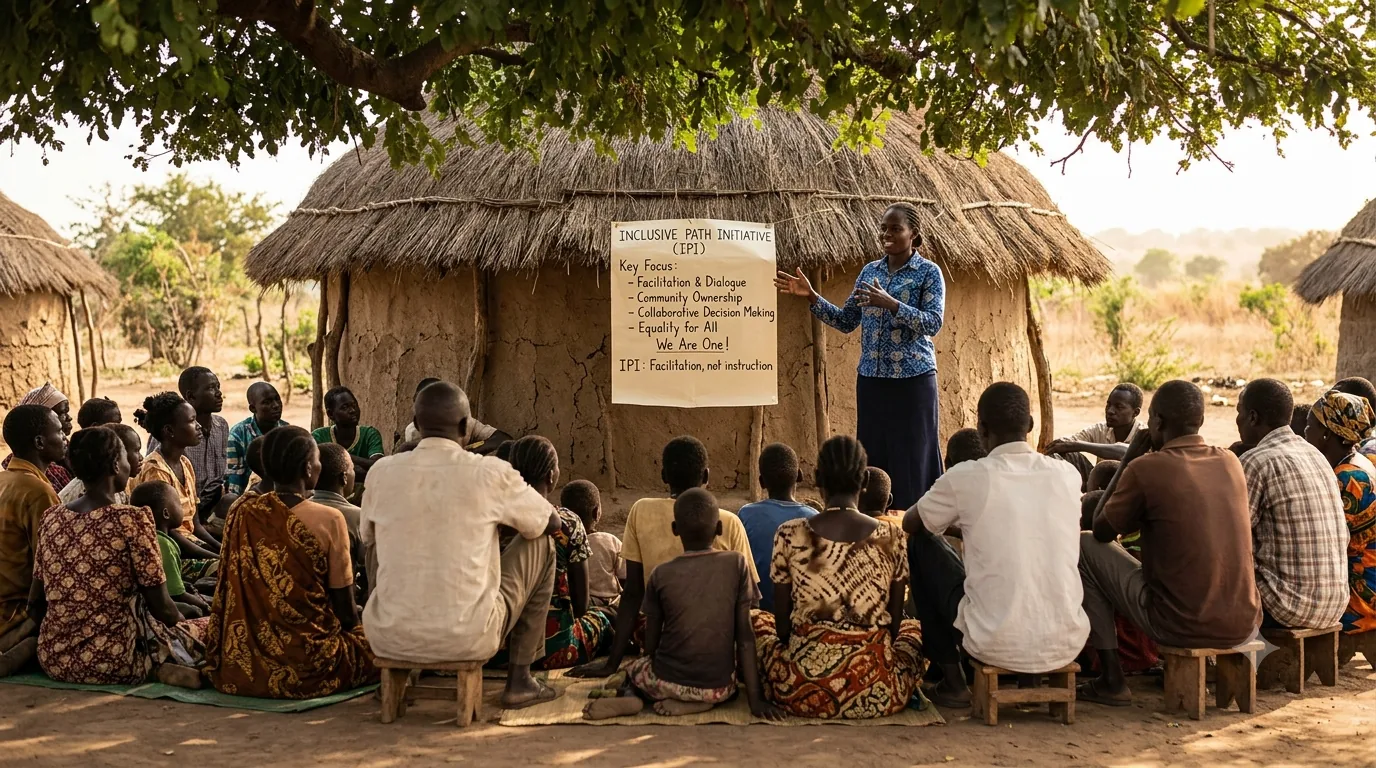
Communities set the priorities. We bring resources, facilitation and technical support to what they decide.
Respect for Human Dignity
Assistance delivered in a way that preserves agency and self-respect is the only kind worth delivering.
Cross-cutting approaches
Principles applied to every programme, not selected ones.
Gender equality & social inclusion
Programme design begins from who is being left out, and measures whether that changed.
Conflict sensitivity & Do No Harm
Every intervention is assessed for how it interacts with existing tensions before it begins.
Community participation & ownership
Structures are built to outlast our presence and our funding cycles.
Partnerships
Working with government, civil society, UN agencies and development partners rather than around them.
Sustainability & environmental responsibility
Environmental impact is treated as a programme outcome, not an externality.
Head office
Juba
Country
South Sudan
Founded
2023